AI and your brand book
AI brand guidelines: what works and what doesn’t
AI brand guidelines that invent your brand from a single prompt don’t exist. AI does help with parts of the job: copy drafts, colour suggestions, summaries and mock-ups. Strategy, choices and final judgement remain human work. Here’s where AI saves time, where it goes wrong and where Brandbooks does and doesn’t use AI.
What people mean by an AI brand book
Usually one of two things. Brand guidelines written by a language model such as ChatGPT, Claude or Gemini: you describe your business and get back a mission, core values and a tone of voice. Or an AI brand guidelines generator that creates a whole visual identity: logo, colours and typefaces from a few keywords.
Both produce something that looks like a brand book within minutes. The question is whether it works like one: whether colleagues, agencies and printers make the same choices with it. To judge that, you need to know what to include in brand guidelines and which of those parts AI handles well.
What AI can and can’t do, part by part
| Part | What AI is good at | What you need to decide |
|---|---|---|
| Brand foundation | Summarising your own notes, drafting versions of a mission, asking follow-up questions | Why the brand exists and what it stands for. A model doesn’t know your customers or your history |
| Audience & positioning | Writing up a first persona, shaping a positioning statement | Whether the persona matches what you actually see and hear. An invented persona is worse than none |
| Tone of voice | Rewriting the same copy in three tones, producing sample sentences | Which tone fits, and the do and don’t examples that make your brand recognisable |
| Colour | Suggesting palettes for a mood, naming colours | The choice, and the exact codes. Always check CMYK and Pantone with your printer or a Pantone guide |
| Typography | Suggesting typeface pairings | Licences, legibility and whether the typeface also works in your office software |
| Logo | Quick sketches and exploring directions | The final logo. Have it designed and check that it doesn’t resemble an existing brand |
| Applications | Photorealistic mock-ups of your own designs | Whether the design itself is right. A mock-up shows, it doesn’t decide |
The risks of brand guidelines made by AI
It turns generic
A language model gives the most likely answer. Core values like “reliable, innovative, customer-focused” fit every company, and therefore none. A brand becomes recognisable through choices someone else wouldn’t make.
Made-up codes and facts
AI will confidently give you a Pantone number or contrast ratio that is wrong. Check colour conversions, calculate contrast with the WCAG formula, and verify print colours with your printer.
Unclear rights
With a generated logo it’s uncertain whether you can claim copyright or a trademark, and it may resemble an existing brand. When in doubt, ask a trademark lawyer.
No consistency
Ask the same question twice and you get two different answers. Brand guidelines exist to give one answer, which is still the same a year from now.
Confidential work
You don’t want to paste an unannounced rebrand into a free AI tool. Check where your data goes and whether it’s used for training.
Nobody owns it
Brand guidelines work when someone can explain and defend the choices. “The AI said so” won’t convince a colleague who wants it differently.
A sensible way to create brand guidelines with AI
AI is most useful as a sparring partner and to speed up production work, not as a replacement for the choices.
- 1
Start with people, not a prompt
Talk to customers, colleagues and the founder. Write down what you hear, in your own words. That’s the raw material AI can work with later.
- 2
Let AI produce variations
Give your notes to a language model and ask for five versions of your mission, or the same copy in three tones. You choose, combine and rewrite.
Also ask for the opposite: “How would a competitor say this?” It shows you what is genuinely yours.
- 3
Make the decisions yourself
Choose colours, type and logo with a designer. Write one sentence for each choice explaining why, so you can defend it later.
- 4
Check everything
Verify colour conversions, contrast and font licences. Whatever is in your brand guidelines gets copied by everyone who reads them; a mistake multiplies.
- 5
Show it in context
This is where AI is genuinely strong: mock-ups of your own business card, poster or website show how the brand works in real life, without a photo shoot.
- 6
Record it and keep it current
Put it all in brand guidelines with an owner and a version date. Read how to create brand guidelines for a step-by-step approach.
Where Brandbooks uses AI: mock-ups
In Brandbooks you upload a flat design, pick a scene and a mood (light, warm, dark or in a brand colour), and AI turns it into a photorealistic photo. Each photo uses one AI credit from your workspace’s prepaid balance. These photos were made that way from the designs of the fictional example brands.
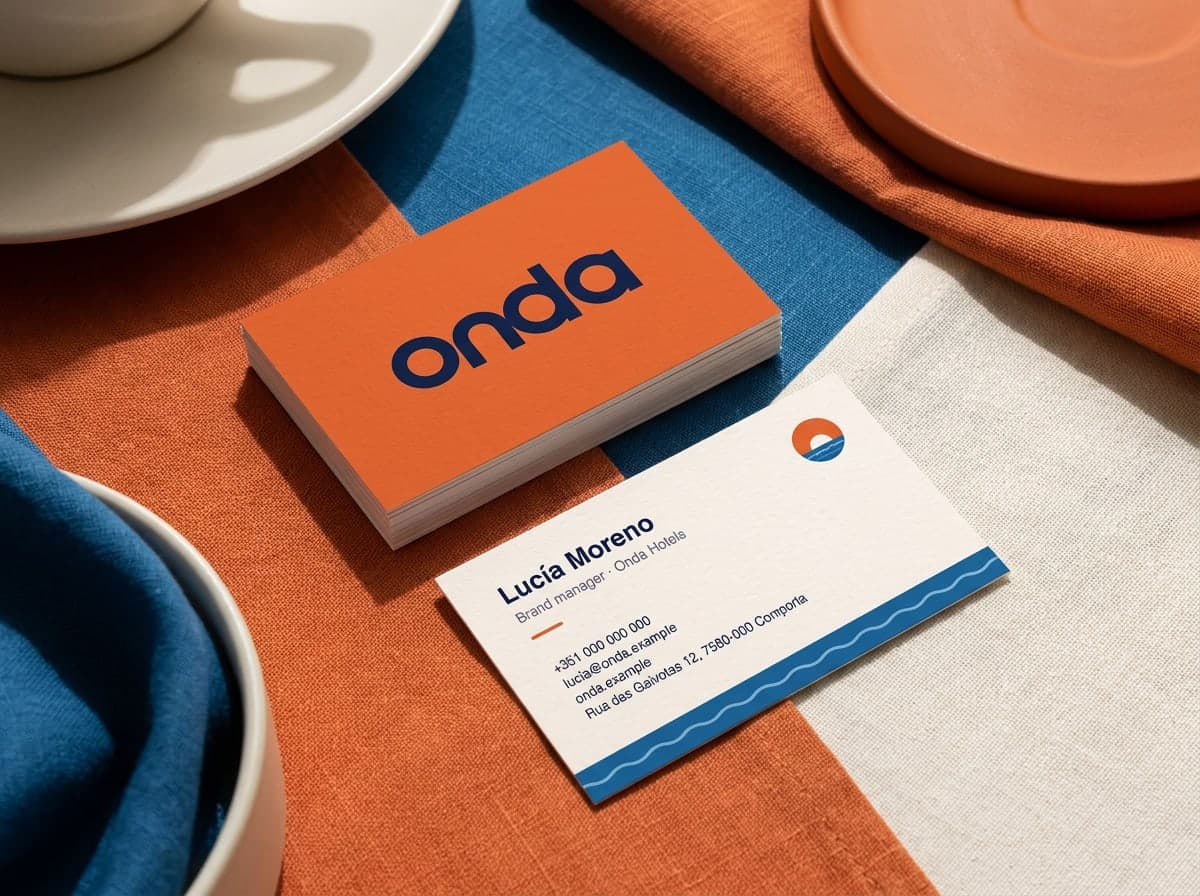
Onda business cards, front and back 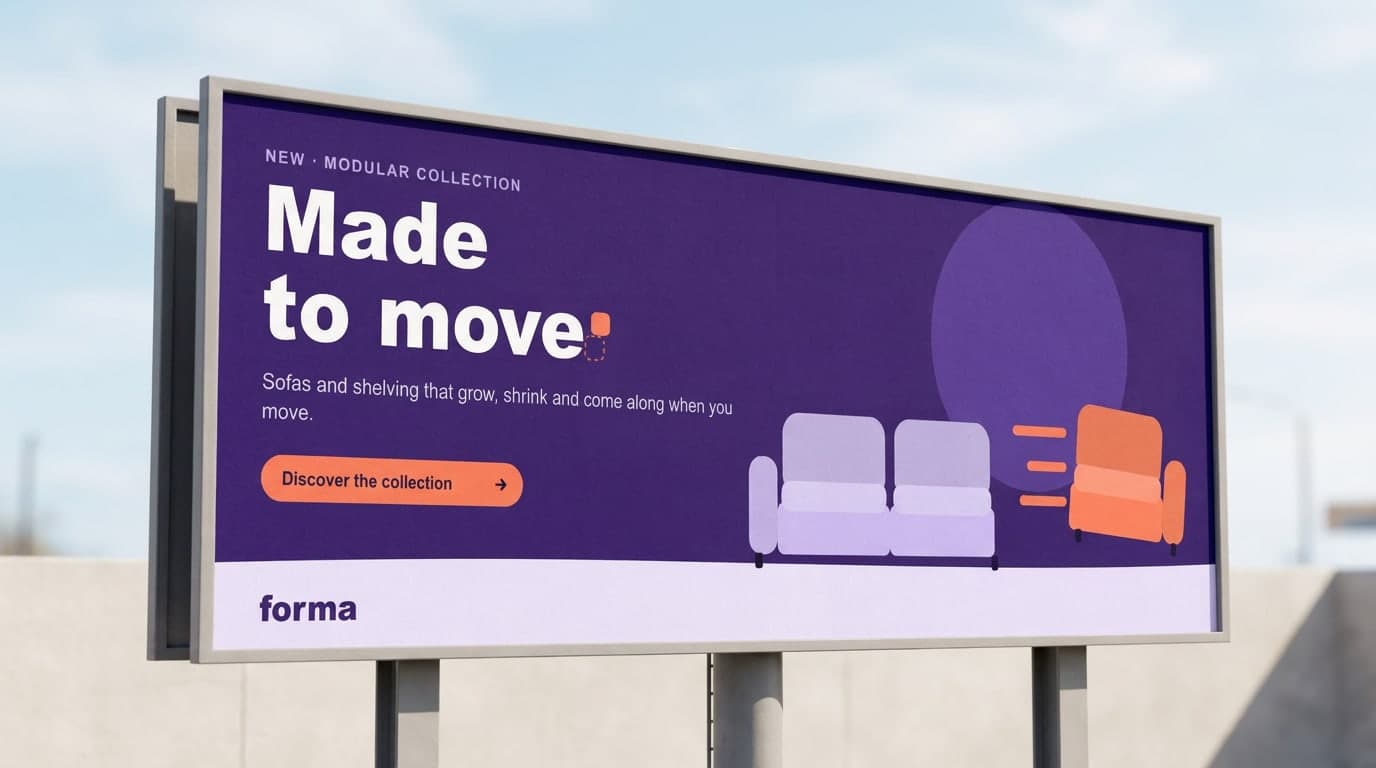
Forma billboard 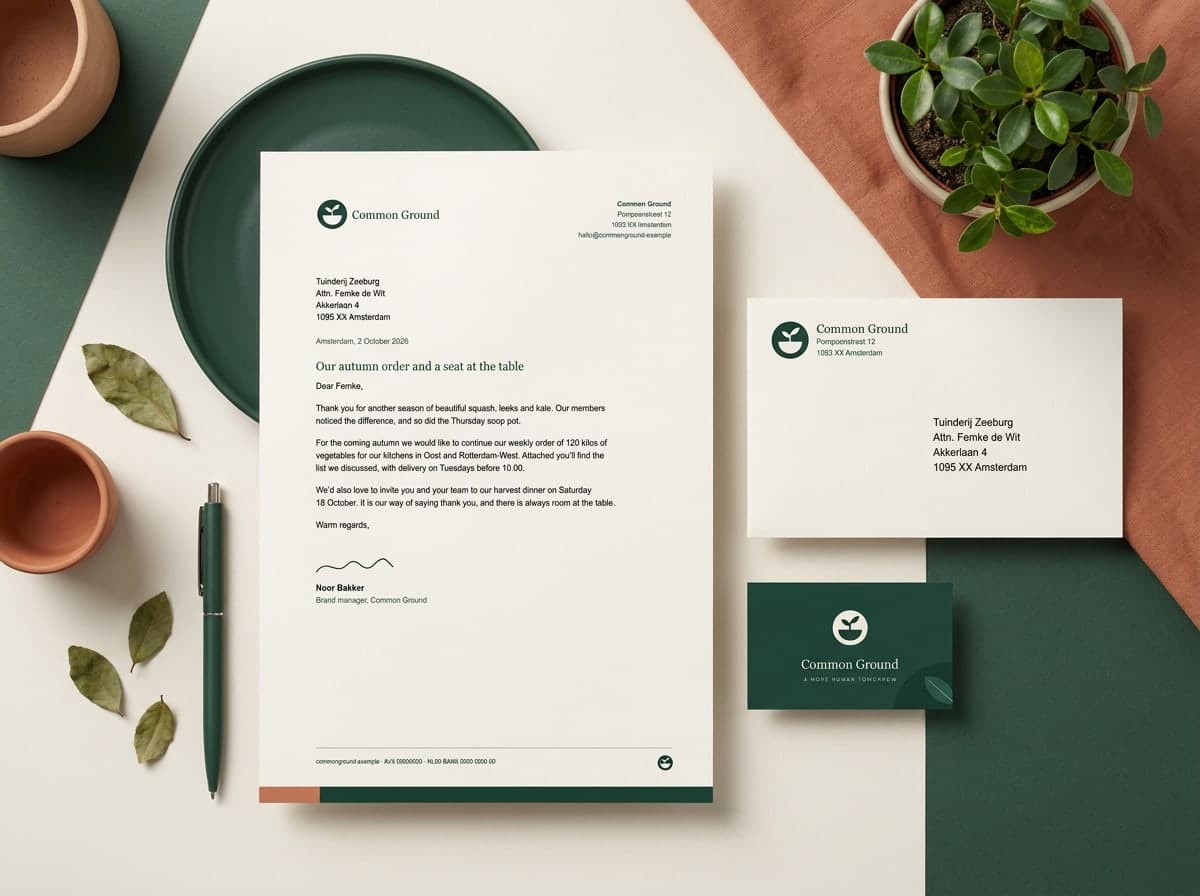
Common Ground letterhead with business card 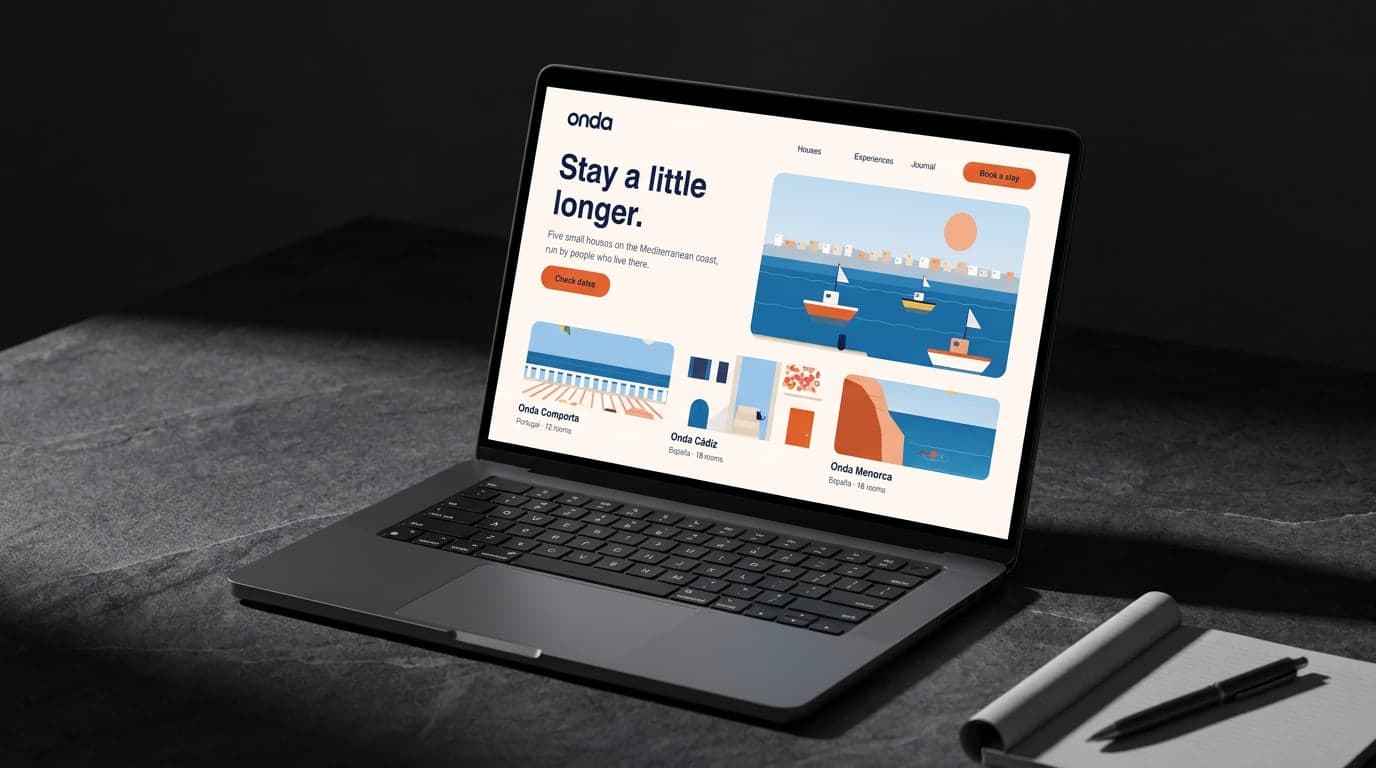
The Onda website on a laptop
And where Brandbooks doesn’t use AI
Brandbooks doesn’t write your strategy, copy or brand guidelines with AI, and it doesn’t design logos. That’s a deliberate choice: the value of brand guidelines lies in the choices you or your designer make, and in everyone seeing the same version.
What Brandbooks does, it does with plain calculation rather than a model. The WCAG contrast of every colour pair is calculated, not estimated. Your colour codes, typefaces and logo files appear exactly as you enter them, and readers copy or download those exact values. More on the features page.
Want to get started yourself? See how the brand guidelines maker works. Prefer to outsource? Read what brand guidelines cost. And to see what good guidelines look like first, browse the brand guidelines examples.
Questions about AI brand guidelines
Can ChatGPT create brand guidelines?
It can make a first draft: a structure, draft copy for your mission and tone of voice, and colour ideas. It only becomes usable brand guidelines once you make the choices, check the codes and add real files and examples.
Can you copyright or trademark an AI-generated logo?
That’s uncertain. Copyright generally requires human creative input, and a generated logo may resemble an existing brand. Have your logo designed, or at least checked, and ask a trademark lawyer for advice if you want to register it.
Which parts of brand guidelines can AI do well?
Rewriting copy in different tones, summarising notes, drafting variations of a mission or tagline and making mock-ups of designs you already have. Less suitable: positioning, the logo and exact colour codes for print.
Is there a good AI brand guidelines generator?
Generators produce a plausible-looking guide quickly, but the result is only as specific as your input and still needs checking. Treat it as a draft. What makes guidelines useful is real decisions, verified codes, approved files and someone who keeps them up to date.
Does Brandbooks use AI to write your brand guidelines?
No. Brandbooks only uses AI to create photorealistic mock-ups of your own designs, such as a business card, poster or website. Each photo uses one AI credit from your workspace’s balance. Copy, strategy and design stay yours.
Is AI cheaper than hiring an agency?
For individual tasks, yes. But AI doesn’t replace the thinking a good agency does, such as interviews, making choices and defending them. A middle way is documenting what exists yourself and hiring a designer for the parts where you get stuck.
Keep reading
- Brand guidelines makerA brand guidelines maker for guides people actually openA brand guidelines maker that does the layout for you: start from a twelve-part blueprint, add your brand and share one link instead of a PDF. See live demos.
- Hiring a designer or agencyWhat brand guidelines cost, and how to hire wellWhat do brand guidelines cost when you hire a designer or agency? Indicative prices, what you get, how to brief and what to ask at handover. With a checklist.
- Guide · ContentsWhat to include in brand guidelinesWhat to include in brand guidelines: all 12 parts explained, what goes in each, what’s optional and the mistakes to avoid. With a live example to click through.
Give your brand a home.
We’re opening Brandbooks in small groups. Join the waitlist and we’ll invite you personally — free during early access.