Brand guidelines examples
Brand guidelines examples you can actually click through
The best brand guidelines examples are the ones you can see whole, from brand story to downloadable logo files. Below are three complete example brand books you can explore live, the same guide in eleven presentation styles, the brand at work in real mock-ups and a handful of public brand guidelines worth studying.
Three complete brand book examples
Each example is a fully written brand book for a fictional brand, built in Brandbooks. Use it the way a designer, printer or new colleague would: look up a colour, download a logo, read how the brand writes.
- View live demoFull brandbookA complete brand system for a team or client handover.12 pages
- View live demoBrand essentialsA new or small brand that needs every part covered, without the heavy lifting.12 pages
- View live demoCampaign playbookCampaign guidelines for partners, channels and content — the brandbook stays leading.7 pages
What each example teaches you
The three examples differ in scope and purpose. Pick the one closest to what you need to make.
| Example | Brand | Scope | Look closely at |
|---|---|---|---|
| Full brandbook | Onda, a small family of coastal guesthouses around the Mediterranean | 12 parts, in depth | How colour is written out for every use (HEX, RGB, CMYK, Pantone, proportions and contrast) and how tone of voice is explained channel by channel. |
| Brand essentials | Common Ground, neighbourhood food co-ops and community kitchens in Amsterdam and Rotterdam | 12 parts, compact | How to cover every part in fewer pages, and how accessibility (plain language, large type, contrast) runs through the whole guide. |
| Campaign playbook | Forma, a furniture brand launching a modular collection | 7 chapters | How a campaign builds on the brand book: the idea, timing, key messages, formats and channel-by-channel guidance for partners. |
Onda, Common Ground and Forma are fictional brands. The content is written so it could sit in a real brand’s guidelines.
The same brand book in eleven styles
Brand guidelines don’t have to look like a forty-page PDF. This is exactly the same Onda content, presented differently each time: from one calm column or a classic sidebar to full-screen slides or a magazine with chapter covers. Click a style to open the example that way.
Which style suits which brand?
For a reference guide people mostly search and scan, Sidebar and Top bar work best: the contents are always in view and you scroll through. Pages and Slides suit a guide you present, such as a handover to a client or a kick-off with a new agency.
Editorial, Cinema and Split give the brand more room and imagery. Choose them when the guide also has to persuade, for example to land a rebrand internally. Atlas and Horizon show the whole brand in one overview, handy for people who want to find things fast.
Applications: what an identity looks like in real life
A strong example shows the result, not just the rules. These mock-up photos come from the three example brand books. They were generated with AI from each brand’s flat designs, the same way you can do it with your own designs in Brandbooks.
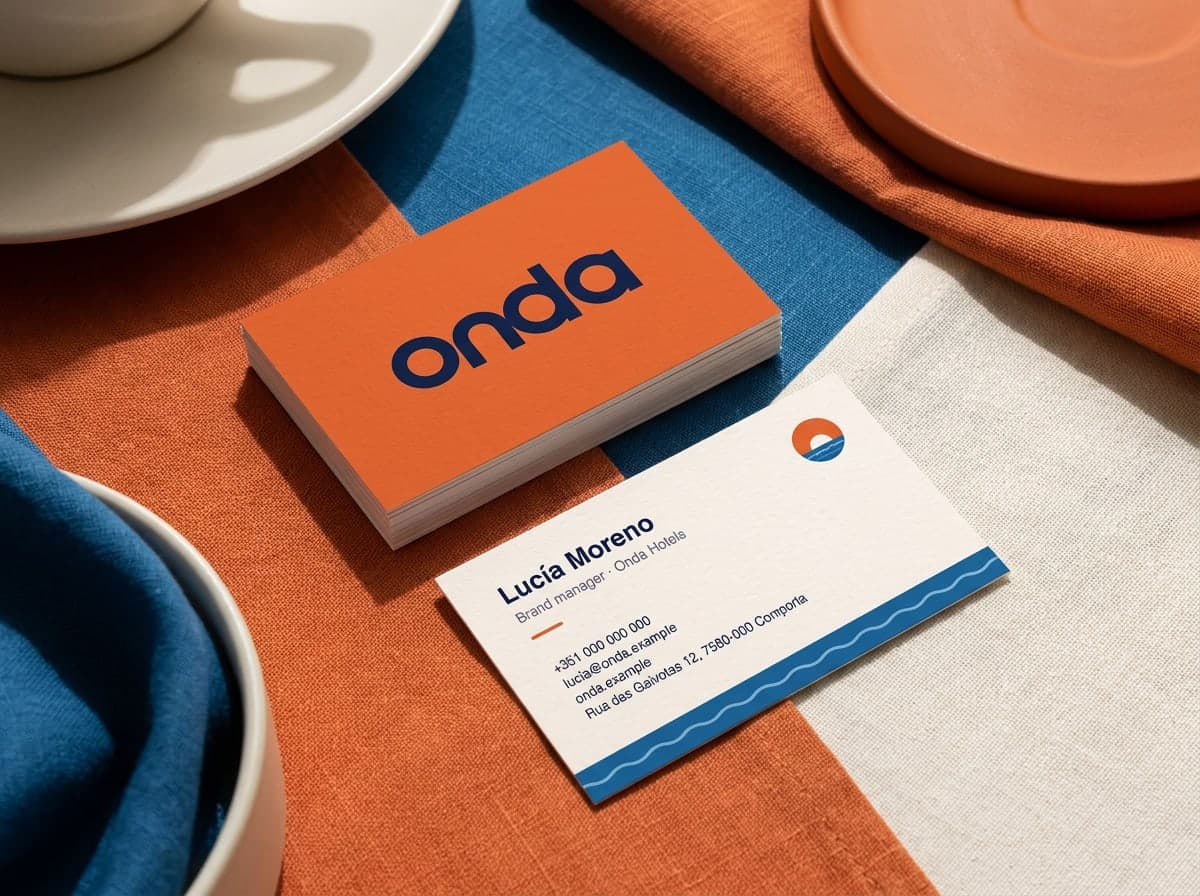
Onda: business cards, front in Sunset 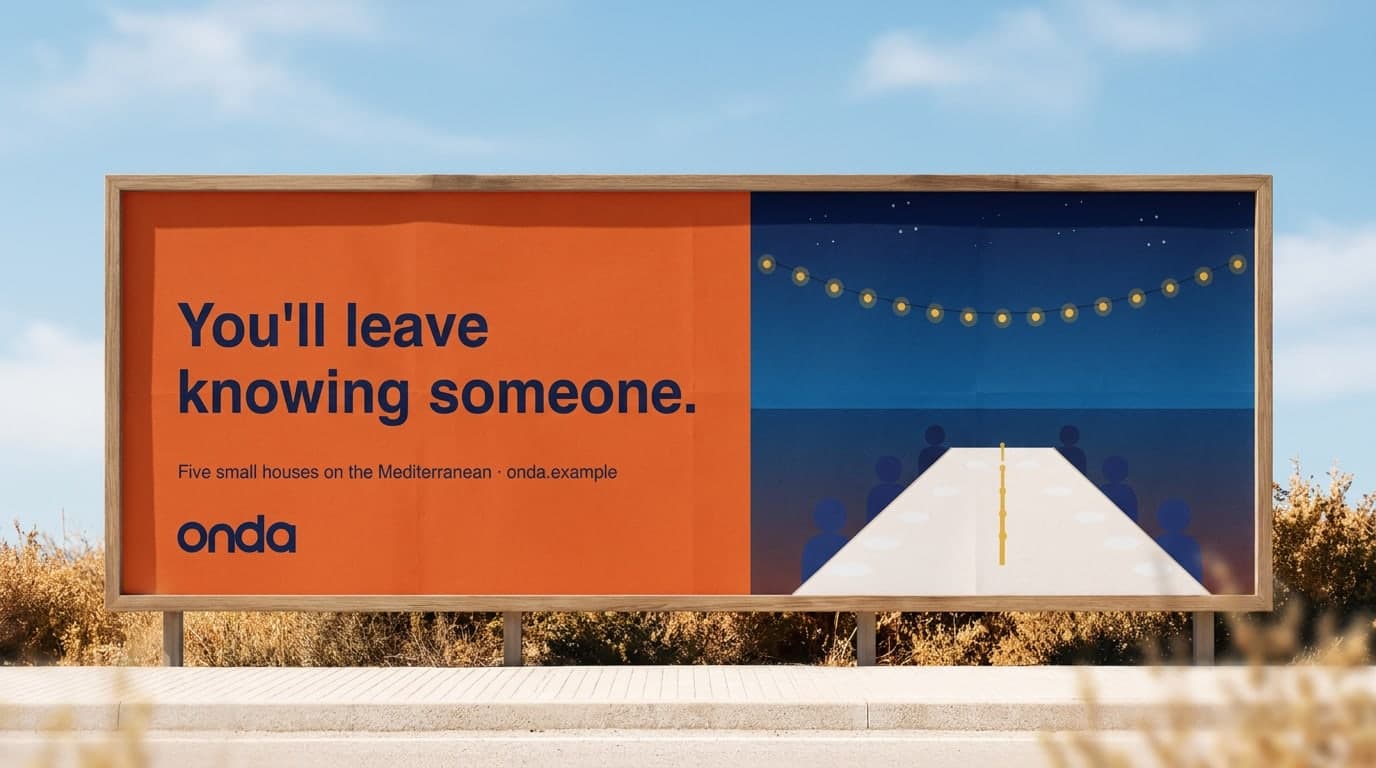
Onda: billboard carrying the brand promise 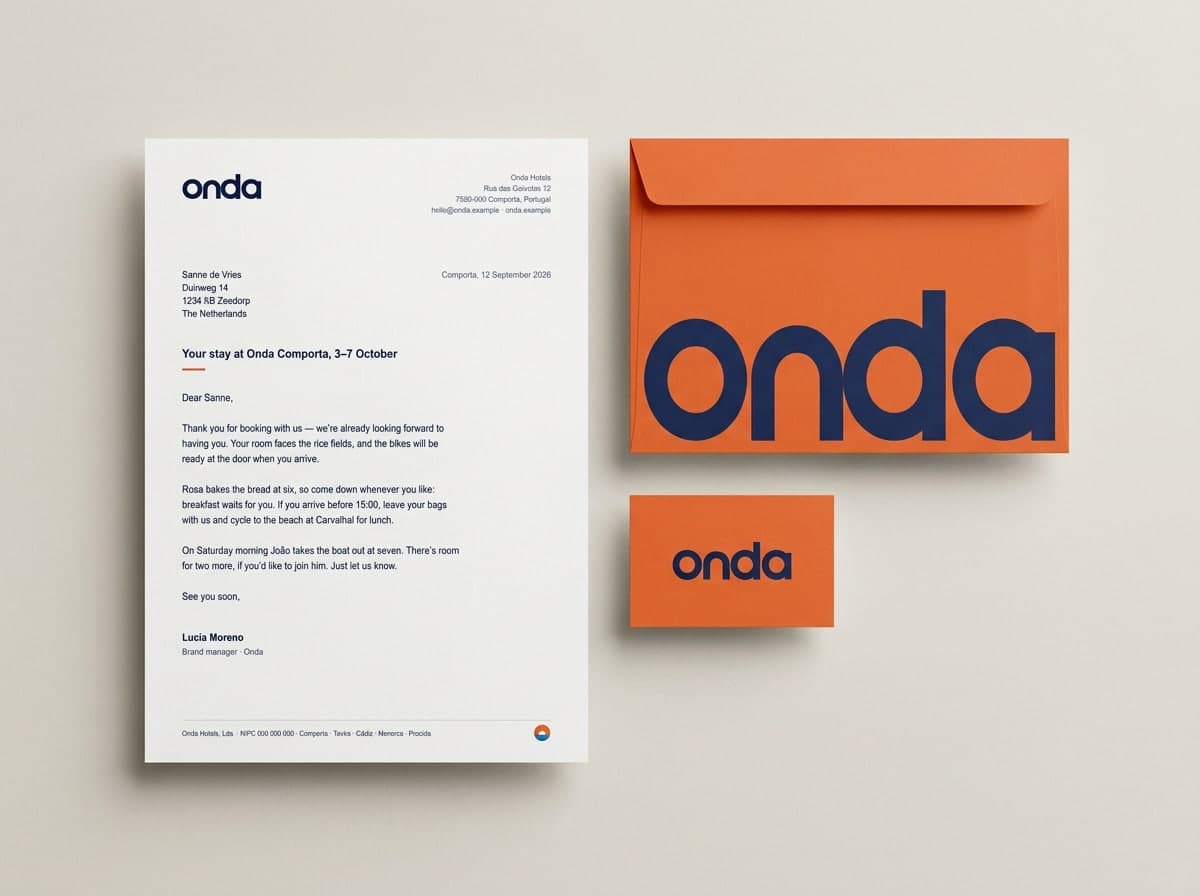
Onda: letterhead and envelope 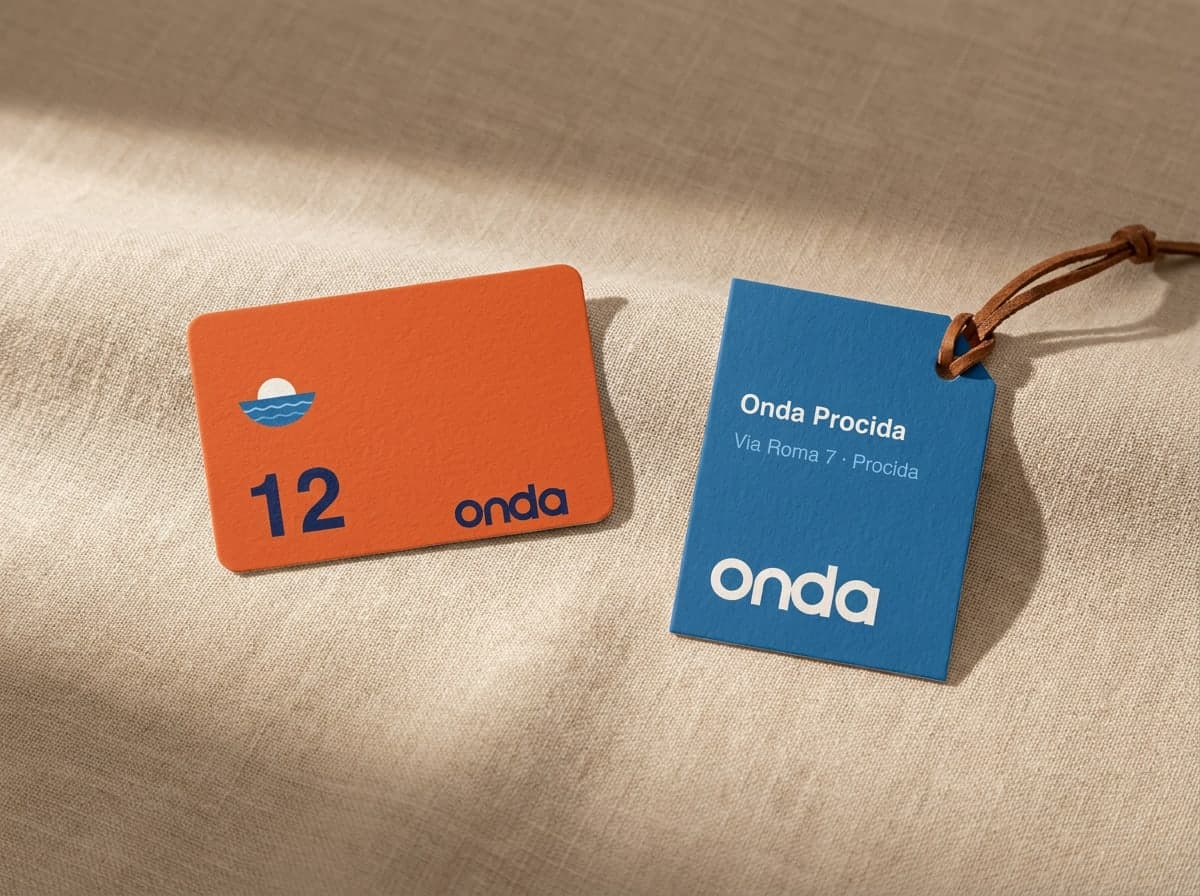
Onda: key card and luggage tag 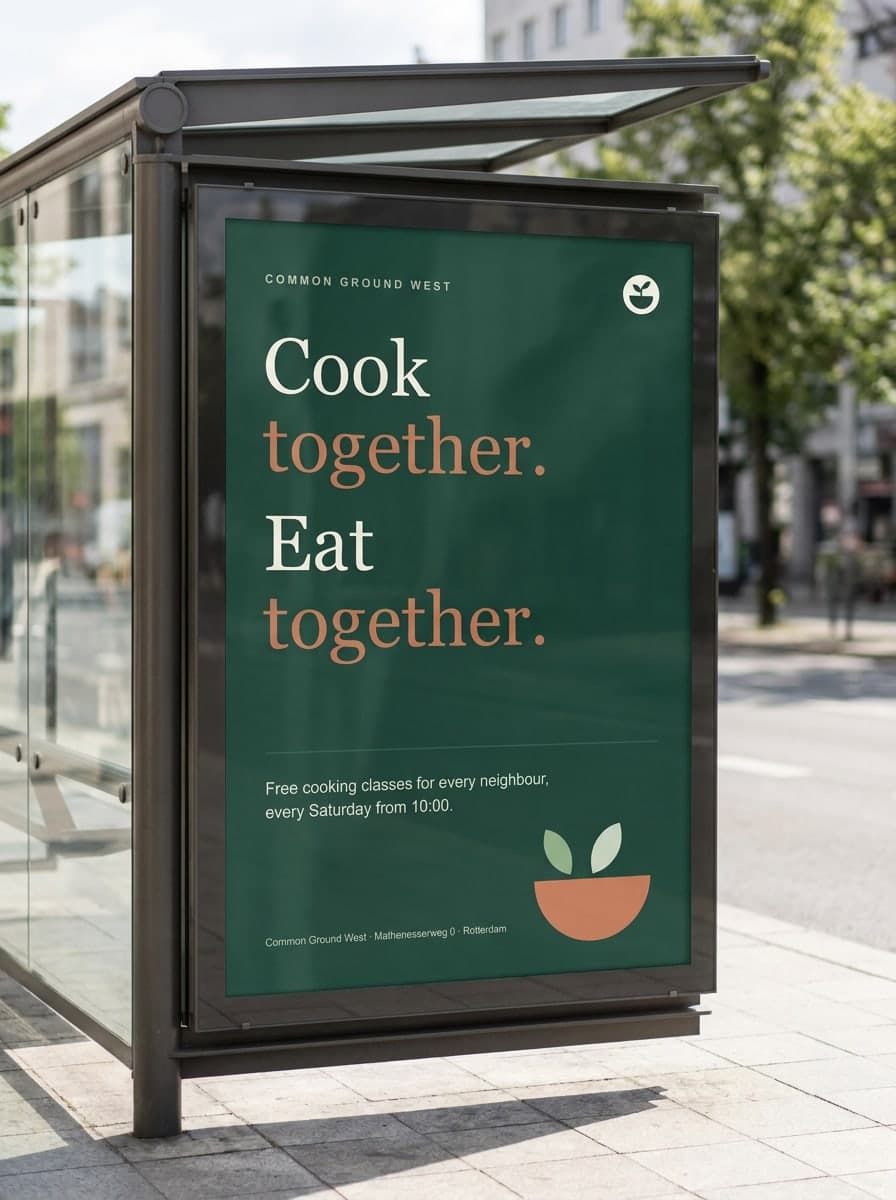
Common Ground: poster for the cooking classes 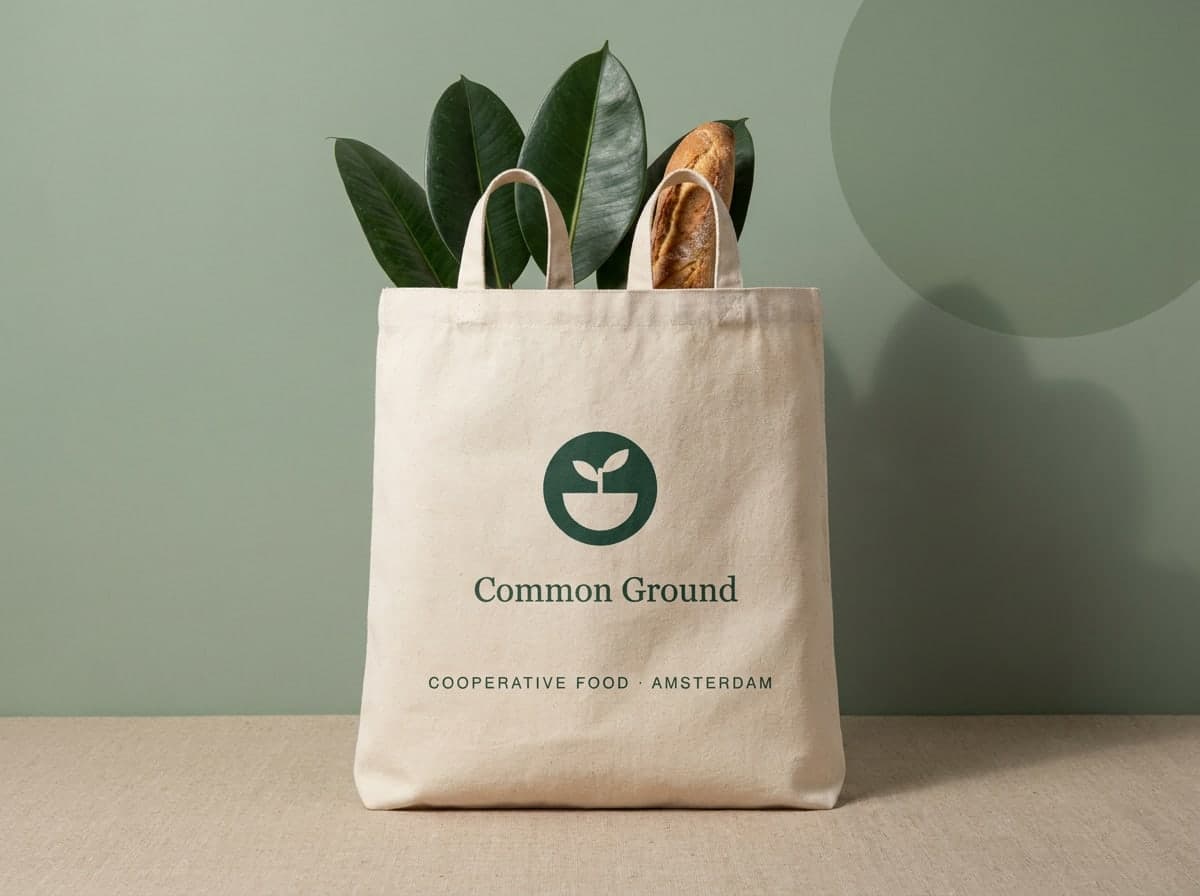
Common Ground: tote bag with the stacked logo 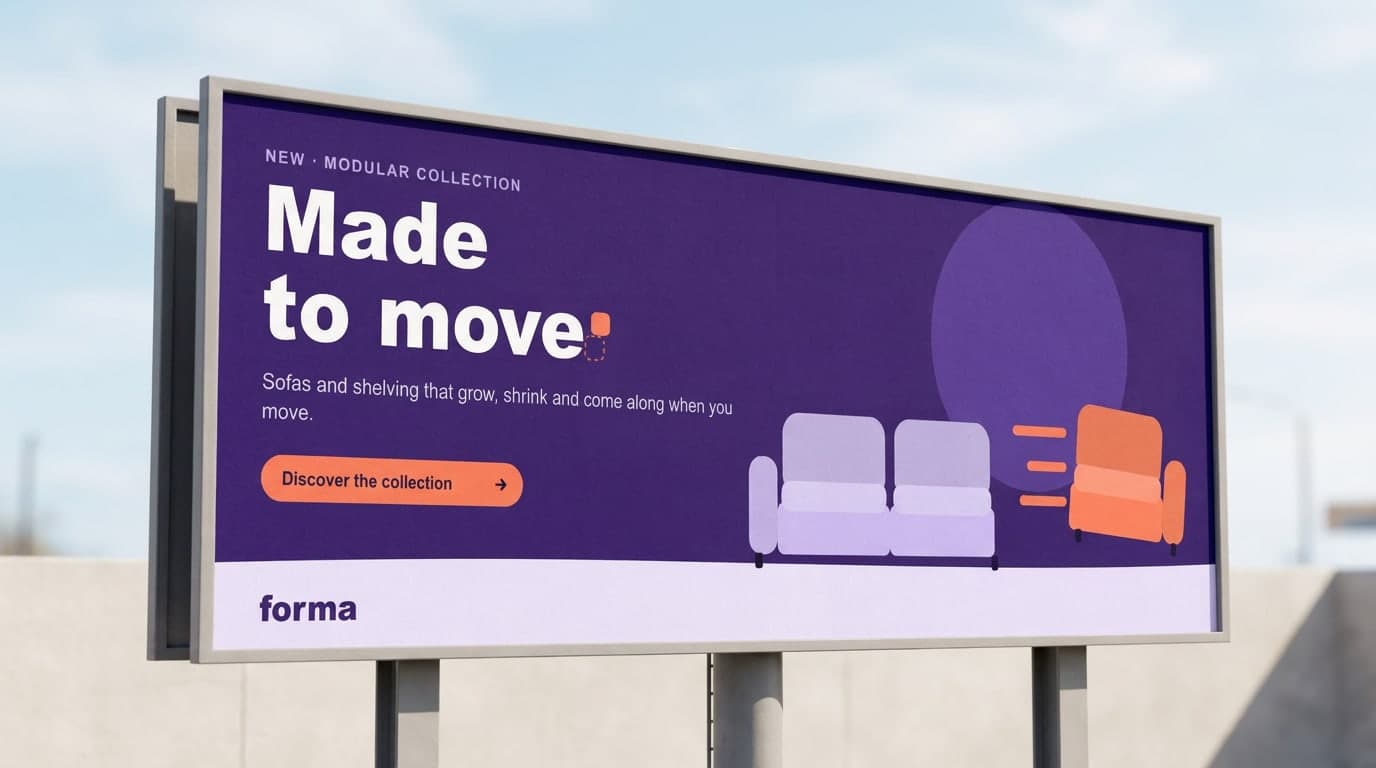
Forma: campaign billboard 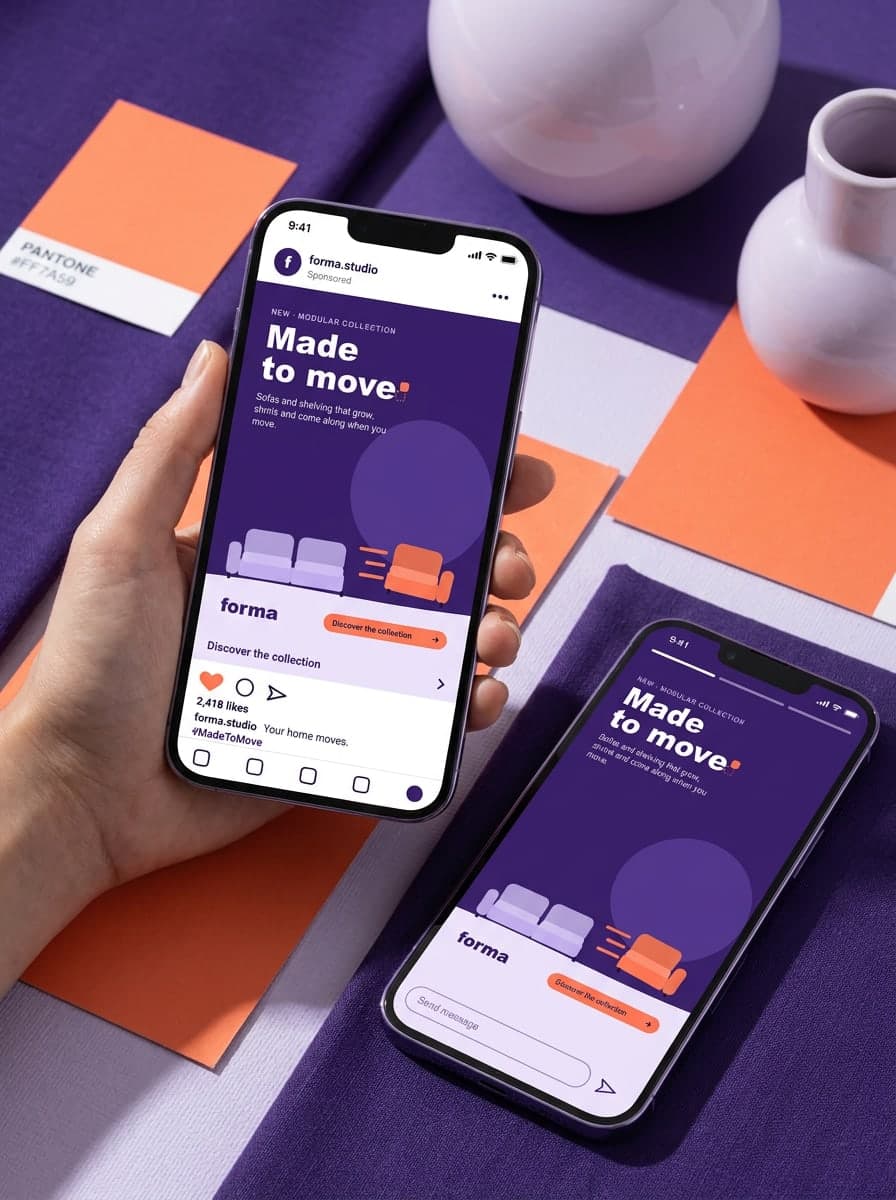
Forma: feed post and story
How to recognise a good brand guidelines example
Not every beautiful brand book is a good example. Look for these six things, including when you compare the examples above with what you find elsewhere.
It starts with why
Mission, values and audience come first, and the rest of the guide refers back to them. Without that foundation, colours and typefaces are just loose choices.
Rules with a reason
Not just ‘use Sunset sparingly’, but how much (16% of a layout) and why. A rule that comes with an explanation gets followed more often.
Do’s and don’ts, shown
Good examples show misuse: a stretched logo, a colour pair without enough contrast, a photo with a heavy filter. That teaches faster than text.
Values you can copy
HEX, RGB, CMYK and Pantone for every colour, type sizes and line heights. Nobody making something should have to guess, or pick a colour from a screenshot.
The files are included
Logos in the right versions and formats, with a note on which file is for what. Otherwise everyone keeps emailing to ask for ‘the right logo’.
An owner and a date
Who maintains it, when was it last updated, who do you ask? Brand guidelines without an owner go out of date without anyone noticing.
Real brand guidelines that are public
Most organisations keep their brand book internal, but some share it openly. These are worth browsing, each for a different reason.
| Organisation | What you can learn from it |
|---|---|
| Mailchimp Content Style Guide | One of the best-known public writing guides. A good model for working out voice and tone, including grammar, accessibility, translation and a word list. |
| Spotify Design Guidelines | Guidelines for partners and developers. Shows how to write logo use, minimum sizes (in pixels and millimetres) and colour rules briefly and unambiguously for outsiders. |
| LinkedIn Brand Guidelines | A tight example of guidelines for third parties: when you may and may not use the logo, badges and name, and how to avoid implying endorsement. |
| Atlassian Design System | How a large software brand organises colour into roles and tokens, with WCAG AA contrast rules. Useful if your brand book also has to work for digital products. |
| GOV.UK Design System | Not a brand book but a public design system for UK government services. Shows how an identity turns into reusable, accessible styles, components and patterns. |
Links checked on 2 October 2026. Organisations sometimes change their guides or take them offline.
From example to your own brand book
Know what you want after looking around? Read what to include in brand guidelines for what to cover in each part, then follow the step-by-step guide on how to create brand guidelines.
Want to build it online straight away? In Brandbooks you start from the same blueprint as the examples above, filled with your colours, fonts and logo. It’s free during early access; you join through the waitlist. Would you rather have someone make it for you? Read what brand guidelines cost first.
Questions about brand guidelines examples
Where can I find good brand guidelines examples?
Above are three complete examples you can open live: an in-depth brand book (Onda), a compact version (Common Ground) and a campaign playbook (Forma). Some organisations also publish their guidelines, such as Mailchimp for voice and tone, Spotify and LinkedIn for logo use by partners, and GOV.UK for a public design system.
How many pages should brand guidelines have?
It depends on the brand. A compact brand book covers the twelve parts in a few pages each; a full brand system can easily run to forty pages or more as a PDF. More important than the page count is that every part answers the questions of the people who use it.
Can I copy a brand book example?
The structure, yes: which parts belong in it and in what order is no secret. The content, no. Another brand’s logos, copy and images are protected, and a brand story that isn’t yours won’t help your brand anyway.
What is the difference between a brand book and a brand style guide?
A brand style guide usually focuses on the visual identity: logo, colour, typography and applications. A brand book also describes the brand itself, such as mission, audience, personality and tone of voice. In practice the terms are often used interchangeably. More in what is a brand book.
Are the examples real brands?
No. Onda, Common Ground and Forma are fictional, so we can show everything, including files and contacts. The structure and level of detail are those of a real, complete brand book.
Keep reading
- Brand style guide exampleA brand style guide example, explained page by pageWalk chapter by chapter through a complete brand style guide example: what’s on each page, why it’s there and what to borrow for your own. With a live demo.
- Brand guidelines templateBrand guidelines template: the complete outline, freeA free brand guidelines template with all 12 parts and what to fill in for each. Copy or download the outline, or fill it in online as a live brand book.
- Guide · ContentsWhat to include in brand guidelinesWhat to include in brand guidelines: all 12 parts explained, what goes in each, what’s optional and the mistakes to avoid. With a live example to click through.
Give your brand a home.
We’re opening Brandbooks in small groups. Join the waitlist and we’ll invite you personally — free during early access.