
Chapter 9 of 12
Tone of voice
Talk like a good host
Imagine you've just arrived and your host is showing you around: relaxed, warm, full of little tips, never selling. That's how we sound everywhere — on the website, in a confirmation email and on the card on your pillow.
Warm, not syrupy
We're glad you're here, and we say so simply. No 'dear valued guest', no exclamation marks in every line.
Specific, not generic
Not 'authentic local experiences', but 'fishing with João at six'. Names, times, smells and places.
Curious, not clever
We share what we love and ask what you love. No puns, no jargon, no showing off.
Unhurried, not lazy
Short sentences and plenty of air — but always correct, clear and complete. Calm is not careless.
Character
We are, we are not
We are
Welcoming, like an open kitchen door Curious about people and places Calm and confident Sunny and optimistic Honest about what we are — and aren't
We are not
Pushy, salesy or full of urgency Posh, exclusive or snobbish Over-familiar or too cute Vague, poetic for its own sake A hotel chain talking to 'customers'
Lines
Our line and slogans
The brand line is fixed; campaign lines change by season. Always in the guest's language — never translate the brand line word for word into a third language without checking with us.
Brand line
Travel, people, culture. Under the logo on covers, posters and the website footer. Always with full stop, never in capitals.
Campaign lines 2026
Stay a little longer. You'll leave knowing someone. Breakfast waits for you.
House greetings
Bom dia, Comporta. Buenos días, Cádiz. Buongiorno, Procida. Local greetings are welcome in headlines and on social — never in contracts or invoices.
Before and after
Same message, Onda voice
- “Rosa bakes the bread at six. Come down whenever you're ready — breakfast waits for you.”
- “Your room faces the harbour. Leave the shutters open and the boats will wake you around seven.”
- “Five rooms left for September. That's when the sea is warmest and the beaches are ours again.”
- “Enjoy our luxurious breakfast buffet, served daily between 07:00 and 10:00!”
- “Experience breathtaking sea views from our premium deluxe rooms.”
- “HURRY! Only 5 rooms left — book now before it's too late!!”
In practice
Writing per channel
The voice stays the same; the volume changes. Here's how we adjust it, with examples you can borrow.
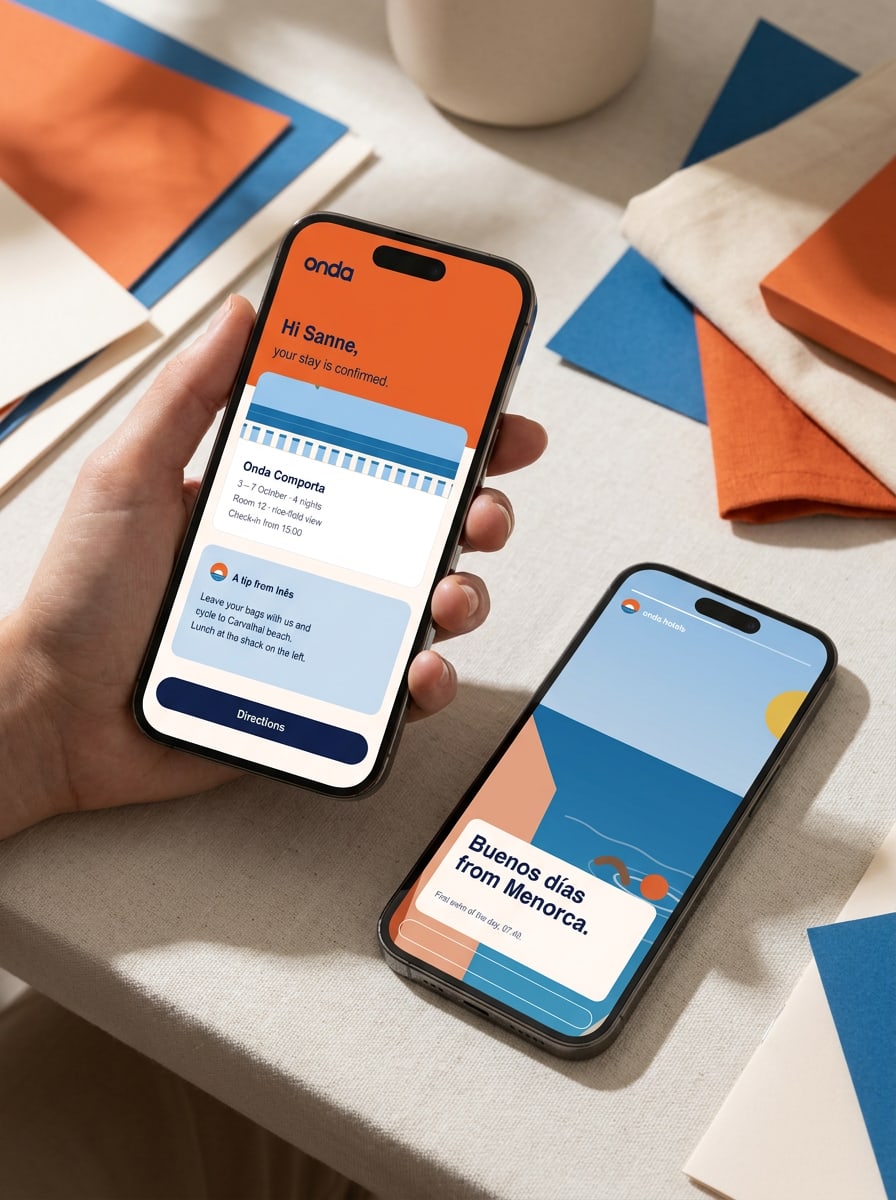
Website
Booking and pre-arrival emails
Instagram and social
In-room cards and printed matter
Signage
Replying to reviews
Word list
Words we use, words we avoid
Words we love
house (not hotel or property) guest (not customer) host (not staff) room, terrace, table, kitchen slow, warm, simple, together local names: João, Mercado, praia stay, come back, see you tomorrow
Words we avoid
luxury, luxurious, premium, deluxe breathtaking, stunning, paradise hidden gem, authentic experience exclusive, VIP, world-class book now, last chance, hurry package, upgrade, amenities dear valued guest
House style
Writing mechanics
Spelling and form of address
Punctuation and emoji
Names and places
Questions about this guide?
Contact LucíaLast updated 24 Sept 2026
Made with brandbooks